How to Select Energy Saving Lighting from China requires more than comparing prices or wattage. The International Energy Agency has reported that lighting historically consumed about 15% of global electricity. LED technology can reduce this demand significantly. The U.S. Department of Energy states that residential LEDs use at least 75% less energy than incandescent lamps. They can also last up to 25 times longer. These figures are useful, but they do not guarantee every Chinese lighting product performs equally well. A 12-watt lamp may claim high efficiency, yet deliver weak illumination or unstable color after several months.
Reliable selection begins with measurable evidence. Ask Chinese suppliers for LM-79 photometric reports, LM-80 data, TM-21 projections, and complete product datasheets. Check lumens, efficacy, power factor, total harmonic distortion, color rendering, flicker, and operating temperature. For outdoor products, inspect IP ratings and corrosion protection. Independent laboratory verification is safer than relying only on factory brochures. Relevant IEC standards, RoHS documentation, and market-specific certifications should also be reviewed before purchase. China Compulsory Certification may apply to selected products sold domestically, while export requirements differ by destination.
The best supplier should explain LED chips, drivers, thermal design, warranty terms, and replacement procedures clearly. Request samples and test them in the real installation environment. Observe brightness, heat, glare, and color consistency. A low quotation can be attractive. It can also conceal weaker components. Procurement decisions should include shipping, failure rates, maintenance, and total ownership cost. How to Select Energy Saving Lighting is therefore a verification process, not a simple catalog exercise. Some assumptions may still be wrong, so documented testing remains essential.
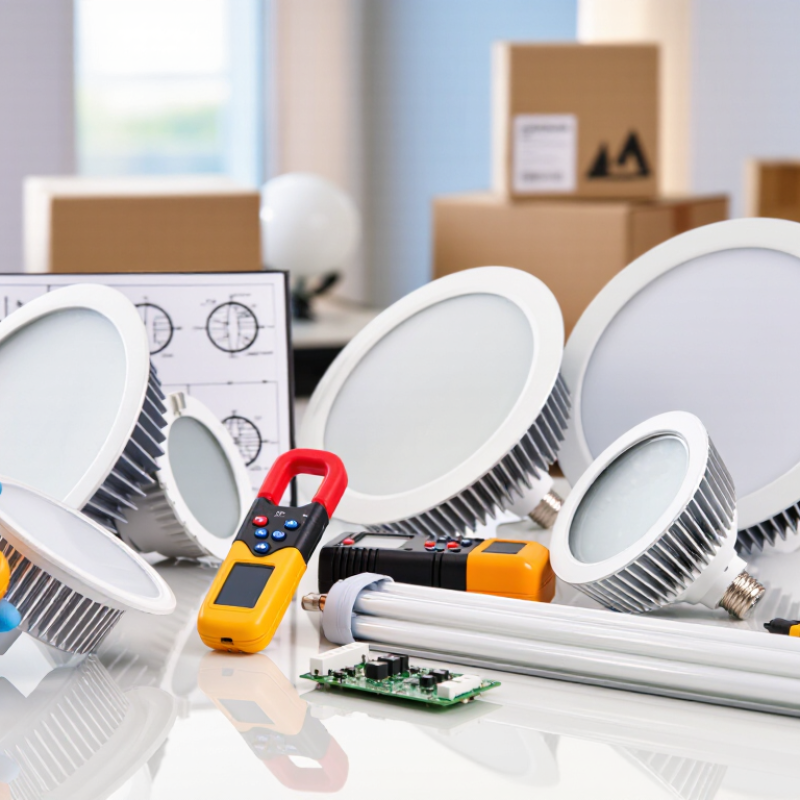
Energy-saving lighting uses less electricity to produce the same useful light. LED fixtures are the most common example. They combine efficient diodes, heat management, drivers, and sometimes smart controls. A good product should also provide stable brightness, suitable color temperature, and a long service life.
China is a practical sourcing market because its lighting supply chain covers components, assembly, testing, and packaging. Buyers can compare several specifications in one region. In real projects, I would request samples before discussing large orders. Check the measured wattage, lumen output, power factor, beam angle, and operating temperature. Ask for test reports from recognized laboratories and verify whether they match the actual model.
Do not trust efficiency claims alone. A cheap fixture may use a weak driver or poor heat dissipation. It can become dim earlier than expected. That mistake is easy to make. Factory audits, production samples, and clear warranty terms reduce this risk. I would also inspect installation instructions, spare-part support, and export experience. Some suppliers communicate well before payment but respond slowly after delivery. That possibility deserves careful checking. The best choice balances energy performance, safety documentation, durability, and total operating cost.
A practical comparison of lighting technologies and key specifications for evaluating energy-saving products from Chinese suppliers.
| Lighting Technology | Typical Efficacy | Typical Service Life | Typical Energy Saving vs. Incandescent | Color Rendering Index | Common Applications | Key Sourcing Considerations |
|---|---|---|---|---|---|---|
| LED Lighting | 80–210 lm/W | 25,000–100,000 hours | 75%–90% | Typically 70–95+ | Residential, commercial, industrial, street, high-bay, and outdoor lighting | Verify tested lumen output, driver quality, thermal management, power factor, surge protection, and LM-80/TM-21 or equivalent performance documentation where applicable. |
| Compact Fluorescent Lamp | 45–70 lm/W | 6,000–15,000 hours | 60%–75% | Typically 80–90 | Older residential and small commercial installations | Check ballast type, mercury-management requirements, start-up performance, dimming compatibility, and end-of-life disposal obligations. |
| Linear Fluorescent | 60–100 lm/W | 15,000–30,000 hours | 60%–80% | Typically 70–90 | Offices, schools, warehouses, retail, and public buildings | Confirm tube dimensions, ballast compatibility, replacement method, flicker performance, and whether the retrofit requires rewiring. |
| Halogen Lighting | 12–22 lm/W | 2,000–4,000 hours | 20%–30% | Typically 95–100 | Accent lighting, display lighting, and specialty applications | Offers high color quality but produces substantial heat and generally has a much higher operating cost than LED alternatives. |
| Metal Halide Lighting | 65–115 lm/W | 6,000–20,000 hours | 50%–75% | Typically 60–90 | Sports facilities, warehouses, high-bay areas, and exterior floodlighting | Evaluate warm-up and restrike time, ballast condition, color shift, ultraviolet output, and the feasibility of LED replacement. |
| High-Pressure Sodium | 80–150 lm/W | 12,000–24,000 hours | 60%–80% | Typically 20–65 | Roadways, security lighting, warehouses, and industrial yards | Provides high efficiency but limited color quality; compare the required light distribution and color performance with an LED alternative. |
| Solar LED Lighting | 100–200 lm/W for LED modules | LED: 25,000–100,000 hours | Can eliminate grid electricity at the fixture | Typically 70–90 | Roads, pathways, parks, remote sites, and off-grid areas | Assess solar resource, battery chemistry, autonomy days, controller efficiency, operating temperature, panel size, and protection against weather and vandalism. |
| Integrated LED Panel | 90–140 lm/W | 30,000–70,000 hours | 50%–80% | Typically 80–90+ | Offices, classrooms, hospitals, retail spaces, and grid ceilings | Check UGR rating, glare control, flicker percentage, color consistency, driver replaceability, ceiling compatibility, and emergency-lighting options. |
| LED High-Bay Fixture | 130–210 lm/W | 50,000–100,000 hours | 50%–80% | Typically 70–90+ | Factories, logistics centers, warehouses, workshops, and sports halls | Match beam angle and mounting height to the photometric plan; verify heat dissipation, ingress protection, surge rating, controls, and maintenance access. |
Note: Figures are typical industry ranges rather than guaranteed values. Actual performance depends on product design, operating temperature, driver quality, installation conditions, control systems, and applicable testing standards. Always request independent test reports, photometric files, samples, and compliance documents before placing a production order.
It produces similar useful brightness while consuming less electricity. LED fixtures are the common example.
China offers components, assembly, testing, and packaging within one supply chain.
Compare LED, linear fluorescent, OLED, solar, and sensor-controlled systems.
Check wattage, lumen output, power factor, beam angle, and operating temperature.
Test samples from the actual production line, not specially prepared units.
Request the company profile, factory address, capacity, and export experience.
Ask for independent laboratory reports and destination-market safety documents.
Compare five-year operating costs, not only the purchase price.
Be cautious when test reports do not match the actual model.
How to Select Energy Saving Lighting from China requires a clear understanding of your project’s lighting needs, energy targets, and operating environment. Energy-saving lighting includes solutions designed to provide effective illumination while reducing electricity use, maintenance frequency, and long-term operating costs. China offers a broad manufacturing base, flexible customization, competitive pricing, and access to various lighting technologies, making it an attractive sourcing option for residential, commercial, industrial, and outdoor projects.
Begin by defining the required brightness, color temperature, installation conditions, control features, service life, and expected energy savings. Compare technologies such as LED fixtures, smart lighting systems, motion sensors, and daylight controls according to performance and application suitability. When evaluating suppliers, review product specifications, testing reports, production capabilities, quality-control procedures, certifications, warranties, and after-sales support. Finally, compare the complete cost, including purchase price, shipping, installation, maintenance, energy consumption, and replacement needs, so you can select reliable lighting that delivers measurable savings over time.

 Cool Light